Fake Bank Calls: How Fraudsters Empty Your Account in Minutes
Introduction
Imagine receiving a call from someone claiming to be from your bank. The caller sounds professional, knows your name, and warns that suspicious activity has been detected on your account. Concerned about your money, you follow their instructions. Within minutes, your account is compromised.
This is one of the most common financial frauds affecting banking customers in Pakistan today. Fraudsters use fear, urgency, and deception to trick people into revealing sensitive information and authorizing fraudulent transactions.
Understanding how these scams work is the first step toward protecting yourself.
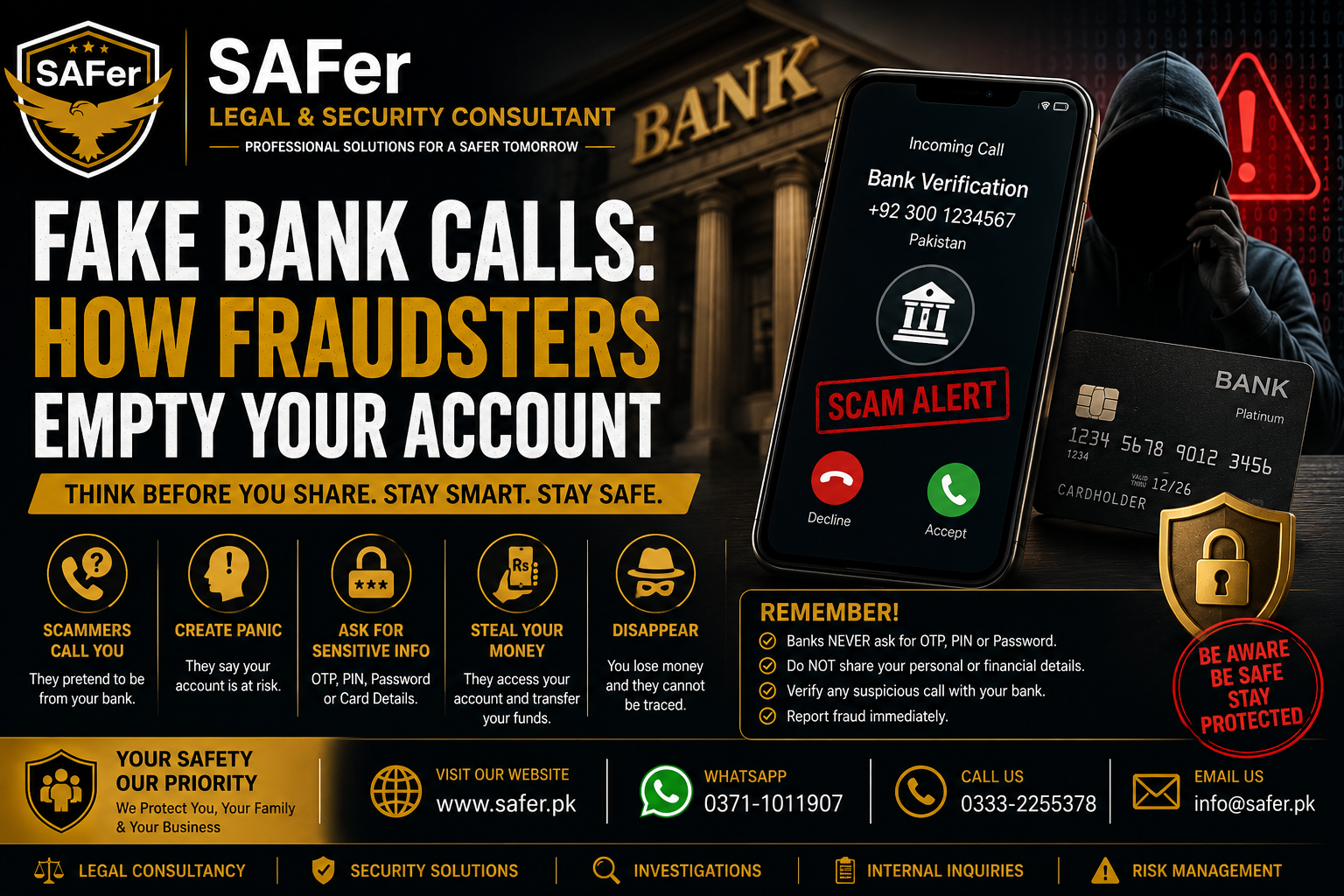
How Fake Bank Call Scams Work
Fraudsters often impersonate representatives of banks, mobile wallet companies, or financial institutions. They may claim:
- Your account has been blocked.
- Suspicious transactions have been detected.
- Your ATM card needs verification.
- Your mobile banking service requires updating.
- Your account will be frozen unless immediate action is taken.
The scammer then requests confidential information such as:
- ATM PIN
- OTP (One-Time Password)
- Internet banking credentials
- Debit or credit card details
- CNIC information
Once obtained, they can access your account and transfer funds.
Common Tactics Used by Fraudsters
- Creating Panic
The caller claims your account is under threat and demands immediate action.
- Spoofed Phone Numbers
Scammers may use technology that displays numbers resembling legitimate bank helplines.
- Fake Verification Process
Victims are asked to share OTPs allegedly for account verification.
- Mobile Wallet Fraud
Fraudsters pretend to represent Easypaisa, JazzCash, or other digital payment services.
- Social Engineering
The caller gathers information from social media or public sources to appear genuine.
Warning Signs
Be alert if:
⚠ The caller asks for your PIN or OTP.
⚠ You are pressured to act immediately.
⚠ The caller threatens account suspension.
⚠ The caller requests confidential banking information.
⚠ The call comes from an unknown or suspicious number.
⚠ You are instructed to install unfamiliar applications.
How to Protect Yourself
Never Share OTPs
Banks never ask customers to disclose OTPs over the phone.
Never Share PINs or Passwords
Your PIN, password, and security codes should remain confidential at all times.
Verify Independently
If you receive a suspicious call, hang up and contact your bank using its official helpline.
Enable Banking Alerts
SMS and mobile app notifications help you identify unauthorized transactions quickly.
Be Cautious with Unknown Calls
Do not trust unsolicited calls requesting sensitive information.
Educate Family Members
Senior citizens and young adults are frequent targets of fraudsters.
What to Do if You Receive a Suspicious Call
- End the call immediately.
- Do not provide any information.
- Contact your bank through official channels.
- Block the suspicious number.
- Report the incident to your bank.
- Save evidence if fraud has occurred.
If You Become a Victim
Contact Your Bank Immediately
Request account blocking and report unauthorized transactions.
Change Your Credentials
Update passwords and security settings immediately.
Preserve Evidence
Save call logs, messages, screenshots, and transaction records.
Report to Authorities
File a complaint with relevant cybercrime authorities and your financial institution.
Seek Professional Assistance
Professional legal and investigative support can help protect your rights and preserve evidence.
Key Takeaways
✔ Banks never ask for OTPs.
✔ Never share PINs or passwords.
✔ Verify suspicious calls independently.
✔ Stay calm and avoid acting under pressure.
✔ Report fraud immediately.
✔ Awareness is your strongest defense.
Conclusion
Fake bank call scams continue to evolve, but their success depends on convincing victims to disclose confidential information. By remaining cautious, verifying communications, and protecting your banking credentials, you can significantly reduce your risk of financial fraud.
Remember:
Your bank may call you, but it will never ask for your OTP, PIN, or password.
Need Professional Legal or Security Assistance?
If you are facing cyber fraud, financial scams, employee misconduct, internal theft, or require professional legal and security guidance, contact:
SAFer Legal & Security Consultant
Professional Solutions for a Safer Tomorrow
💬 WhatsApp: 0371-1011907
📞 Call: 0333-2255378
⚖️ Legal Consultancy | 🛡 Security Solutions | 🔎 Investigations | 📋 Internal Inquiries | 🚨 Risk Management
Your Safety and Peace of Mind Are Our Priority.