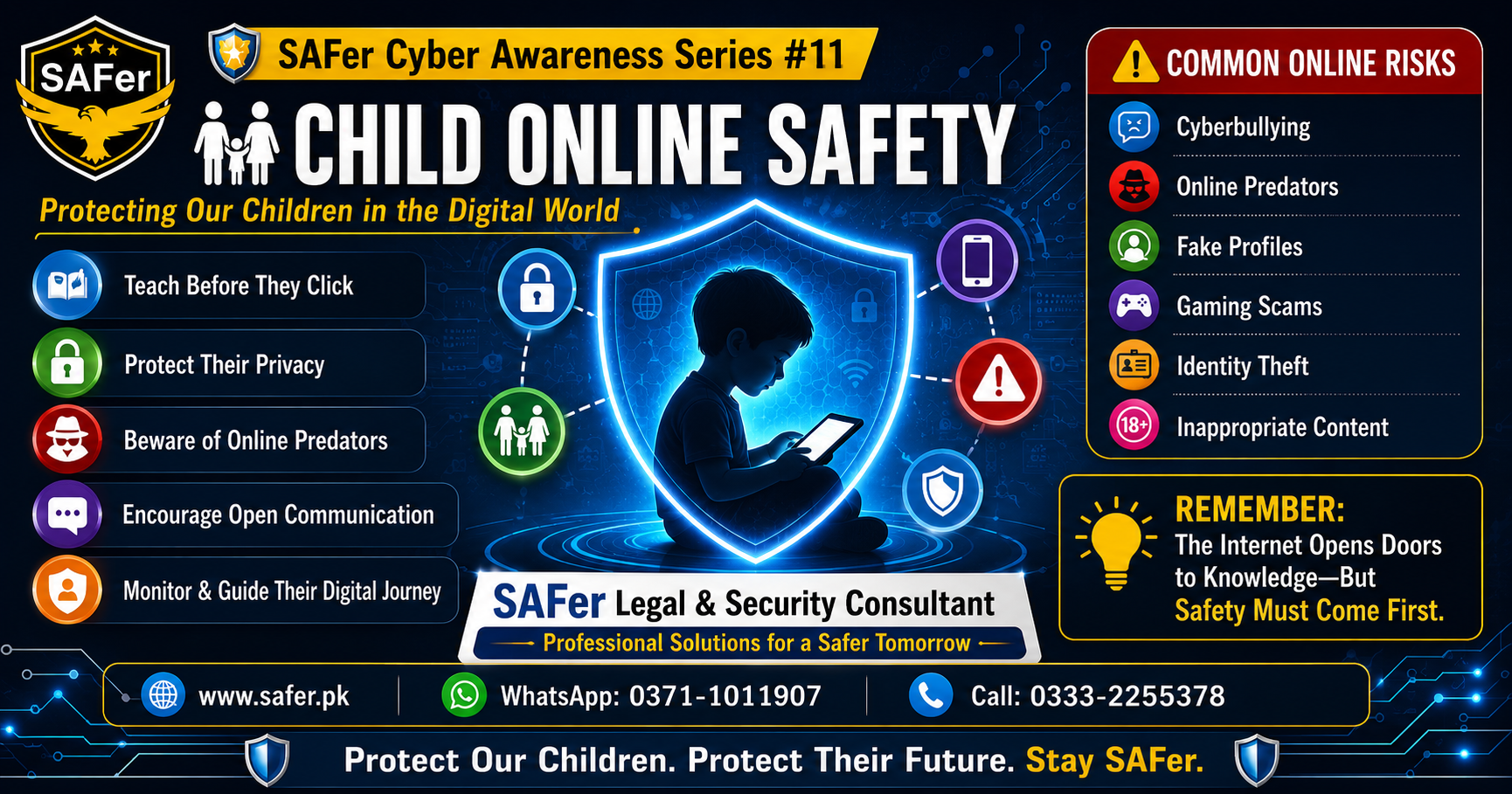
Child Online Safety: Protecting Our Children in the Digital World
By SAFer Legal & Security Consultant
Introduction
The internet has become an essential part of children’s lives. It offers unlimited opportunities for learning, communication, creativity, and entertainment. From online classes and educational videos to games and social media, children are spending more time online than ever before.
However, alongside these opportunities come significant risks. Cybercriminals and online predators often target children because they are naturally curious, trusting, and less aware of digital dangers.
As parents, guardians, educators, and responsible citizens, protecting children in cyberspace is no longer optional—it is a shared responsibility.
Why Child Online Safety Matters
Children are increasingly exposed to:
- Cyberbullying
- Online predators
- Inappropriate content
- Identity theft
- Online gaming scams
- Social media exploitation
- Phishing and fraud attempts
- Excessive screen time and digital addiction
Without proper awareness and supervision, these risks can negatively affect a child’s emotional well-being, privacy, education, and safety.
Common Online Threats Facing Children
1. Cyberbullying
Cyberbullying occurs when someone uses digital platforms to harass, threaten, embarrass, or humiliate a child.
Examples include:
- Offensive messages
- Rumors and false information
- Sharing embarrassing photos
- Online harassment
- Exclusion from online groups
Impact:
- Anxiety
- Depression
- Loss of confidence
- Academic problems
- Emotional distress
2. Online Predators
Some individuals create fake profiles and attempt to build trust with children for exploitation purposes.
Warning signs include:
🚩 Asking personal questions.
🚩 Requesting photographs or videos.
🚩 Encouraging secrecy.
🚩 Trying to move conversations to private platforms.
🚩 Offering gifts or rewards.
3. Oversharing Personal Information
Children may unknowingly share:
- Full name
- Home address
- School details
- Telephone numbers
- Family information
- Daily routines
This information can be exploited by cybercriminals.
4. Online Gaming Risks
Many online games allow players to communicate with strangers.
Risks include:
- Exposure to inappropriate content
- Fraudulent purchases
- Account theft
- Manipulation by strangers
- Cyberbullying
5. Fake Challenges and Dangerous Trends
Social media platforms sometimes promote viral challenges that may encourage risky or harmful behavior.
Children should understand that not everything online is safe or genuine.
Warning Signs That a Child May Be Facing Online Problems
Parents should pay attention if their child:
⚠ Suddenly becomes secretive about online activities.
⚠ Appears anxious after using the internet.
⚠ Receives messages from unknown individuals.
⚠ Shows unusual emotional changes.
⚠ Avoids discussing social media or online friends.
⚠ Spends excessive time online.
⚠ Receives gifts from people they have never met.
How Parents Can Protect Their Children
Keep Communication Open
Encourage children to discuss their online experiences openly without fear of punishment.
Educate Children About Privacy
Teach children never to share:
- Home address
- School information
- Passwords
- Banking information
- Family details
with strangers online.
Set Internet Safety Rules
Establish guidelines regarding:
- Screen time
- Approved websites
- Social media usage
- Online gaming
- Communication with strangers
Use Parental Controls
Most devices and applications provide parental control features that help monitor and restrict inappropriate content.
Know Your Child’s Online Friends
Encourage children to communicate only with people they know in real life.
Teach Critical Thinking
Help children understand:
- Not everyone online is who they claim to be.
- Information on social media may be false.
- Online offers can be scams.
Digital Safety Tips for Children
✔ Think before sharing information online.
✔ Never share passwords with friends.
✔ Do not meet online friends without parental permission.
✔ Report suspicious behavior immediately.
✔ Avoid clicking unknown links.
✔ Use strong passwords.
✔ Tell a trusted adult if something online makes you uncomfortable.
Real-Life Scenario
Ali, a 13-year-old student, received a friend request from someone claiming to be another student from a nearby school. After several weeks of friendly conversations, the individual requested personal photographs and school information.
Fortunately, Ali informed his parents, who discovered that the profile was fake and immediately blocked and reported the account.
Although fictionalized to protect privacy, this scenario reflects risks commonly encountered by children online.
What Should Parents Do If Their Child Becomes a Victim?
1. Stay Calm
Avoid blaming the child.
2. Preserve Evidence
Save:
- Screenshots
- Messages
- Emails
- User profiles
- Chat histories
3. Block and Report
Report abusive accounts to the relevant platform.
4. Provide Emotional Support
Children need reassurance and support during distressing situations.
5. Seek Professional Assistance
Serious cases involving exploitation, threats, fraud, or identity theft may require professional legal and security guidance.
Key Takeaways
✔ Online safety education should begin at an early age.
✔ Open communication is essential.
✔ Teach children about privacy and digital responsibility.
✔ Monitor online activities appropriately.
✔ Encourage children to report suspicious behavior.
✔ Awareness is the strongest defense against cyber threats.
Conclusion
The internet offers tremendous opportunities for education and growth, but it also presents real risks. By educating children, staying involved in their digital lives, and creating a safe environment for communication, parents and educators can significantly reduce online dangers.
Remember:
Protecting Children Online Is Not About Restricting Technology—It’s About Teaching Safe and Responsible Use of Technology.
Need Professional Legal or Security Assistance?
If you require guidance regarding cybercrime, online exploitation, digital fraud, investigations, or professional legal and security solutions, contact:
SAFer Legal & Security Consultant
Professional Solutions for a Safer Tomorrow
🌐 Website: www.safer.pk
💬 WhatsApp: 0371-1011907
📞 Call: 0333-2255378
📧 Email: info@safer.pk
Our Professional Services
⚖️ Legal Consultancy
🛡️ Cyber Risk Assessment
🔎 Fraud & Digital Investigations
📋 Internal Inquiries
🏢 Corporate Security Solutions
👤 Background Verification
📑 Due Diligence Services
🚨 Crisis & Incident Management
Protect Our Children. Protect Their Future. Stay SAFer.